

 By
By 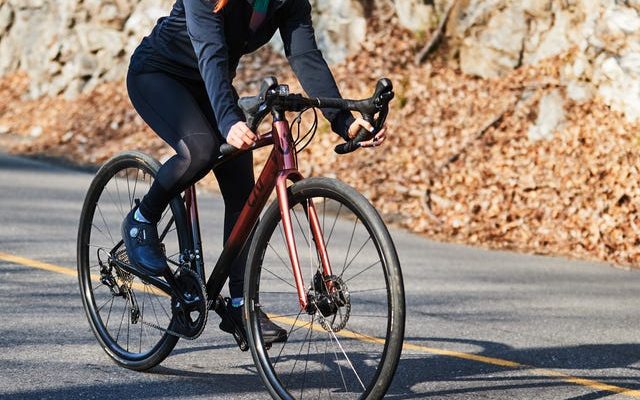
In the words of H.G. Wells, “Every time I see an adult on a bicycle, I no longer despair for the future of the human race.”
Expanding this argument, it means that even the younger generation will gladly and comfortably key into the philosophy of riding bicycles as a way of improving their health, keeping fit all the time while also not negating the economic benefits.
Back home, Late Chief Ojo Mbila Maduekwe, Former Minister of Transportation under the administration of the then President, Chief Olusegun Obasanjo once admonished Nigerians to explore every means of transportation, not just buses and cars but bicycles which is very common in the advanced world and considered to be environment-friendly.

Despite that Maduekwe’s call for use of bicycles made damaging headlines including accusations of taking Nigeria back to the “Stone Age” with this proposal, the truth remains that Nigerians at the moment need to cultivate the habit of riding bicycles and taking care of their transportation needs amid dwindling economic realities.
Today, we talk about the high cost of fuel which goes for as high as N1,250 per liter depending on the location and skyrocketing prices of engine oil, whereas there is a bicycle with zero fuel consumption, no engine filter as well as allows one to use his or her legs in event of brake failure.
Other economic benefits of bicycle which can never be overstated include, spending less money on buying spare tyres, saves the owner from paying money for parking space, among others.
What about the health benefits of bicycle or cycling? Studies have shown that cycling reduces the risk of diabetes, high blood pressure, reduces stress, increases muscle tones, guarantees strong heart and lungs, relegates to the background, noise pollution, to mention but a few. Then one would ask, having known all these health benefits of bicycle or cycling, what is preventing Nigerians from embracing this means of transportation?
Of a truth, the imperative use of bicycle can never be over-emphasized. Till date, it has zero documentation rate, meaning that users will not be embarrassed always for failure to renew their licenses which we see on our highways between motorists and security agents. Till date, there has been no law, banning people from riding bicycles which is why is it pertinent at this time for Nigerians to use more of bicycles in attending to their needs.
In event of road traffic, because of its portable nature and easy carriage, the cyclist can easily maneuver his way by simply lifting his or her bicycle to a decongested area and proceed with his journey. Other benefits include: the cyclist will enjoy natural air, no overloading, it has additional space for passenger, affordable spare parts among others.
Whether Nigerians like it or not, the call to use bicycles regularly as spearheaded by late Chief Maduekwe, has become germane in our contemporary Nigeria where the cost of transportation and purchase of petrol, maintaining vehicles have become the exclusive rights of the wealthy people in the society.
Nigerians cannot continue staying in queues, abandoning other household needs just to buy petrol to power their vehicles whereas they have the option of using bicycles which is laying unattended to in majority of homes in Nigeria. It is time for Nigerians to understand that indeed necessity is the mother of invention.
Have we even thought of a society where everyone will be riding bicycles, no buses, cars, among others just bicycle conveying people to work as well as used to take care of daily chores. The experience will be massive as it will lead to many filling stations closing up or even have the pump price of petrol slashed immediately as well as improve the health status of many.
Indeed, the economic, health and other benefits associated with the use of bicycle in addressing or attending to daily problems cum needs, makes the bicycle a means of transportation that should be appreciated and sought after by the masses who currently cannot afford petrol due to its high cost.
Written by Izuchukwu Nwokoma, A Journalist, Public Affairs Analyst.







Comments