

 By
By 
Governor Alex Otti of Abia State at the weekend reaffirmed his administration’s resolve to build a new Abia anchored on transparency, accountability, and people-centered development.
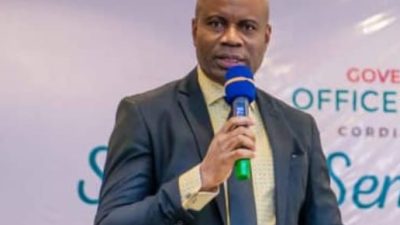
Governor Otti, represented by his Chief of Staff, Pastor Caleb Ajagba, at the 2025 Ngwa Convention in St. Louis, Missouri, USA, reiterated his commitment to accountable leadership and called on Abians in the diaspora to partner his administration in sustaining progress.

According to him, his administration has restored fiscal discipline by introducing a Treasury Single Account, eliminating ghost workers, and ensuring that salaries and pensions are paid promptly on the 28th of every month.
He stressed that these reforms have not only strengthened public finances, but also restored the dignity of labour in the state as well as improved the morale of Abia workforce.
The Governor informed the gathering that over 350 roads have been built or rehabilitated in 27 months, with Aba and Umuahia witnessing major projects such as the Port Harcourt Road reconstruction by Julius Berger and improved flood control measures around Ariaria Market.
According to him, these investments have boosted commerce, reduced travel time, and positioned Abia as a leading state in road infrastructure nationwide.
Beyond road reconstruction, he added that his administration has also improved security significantly through the launch of Operation Crush and the sanitisation of the Lokpanta corridor, with a new security advisory council and trust fund in place.
The governor also highlighted achievements in health and education, including the completion of 150 primary health centres, ongoing reconstruction of general hospitals, introduction of health insurance, and recruitment of 700 frontline health workers.
In education, the Governor told the gathering that over 221 schools are under renovation while 5,000 teachers have been recruited, and 20 Smart Schools under construction, with Igbo Language and History reintroduced into the curriculum.
Otti appealed to the diaspora community to deepen their involvement in the state’s transformation just as he urged them to channel resources, skills, and networks into key sectors such as health, technology, agriculture, industry, and culture.












Comments